A 600-Year-Old Sultan's Glass Lamp Is One of 1,400 Pieces at Hurghada's Antiquities Museum
Hurghada's antiquities museum holds a rare Mamluk mosque lamp of enamelled and gilded glass, linked to Sultan al-Zahir Barquq, who ruled from 1382 to 1398, Youm7 reports. The museum opened in February 2020 and shows about 1,400 objects over two floors.
9 October 2026
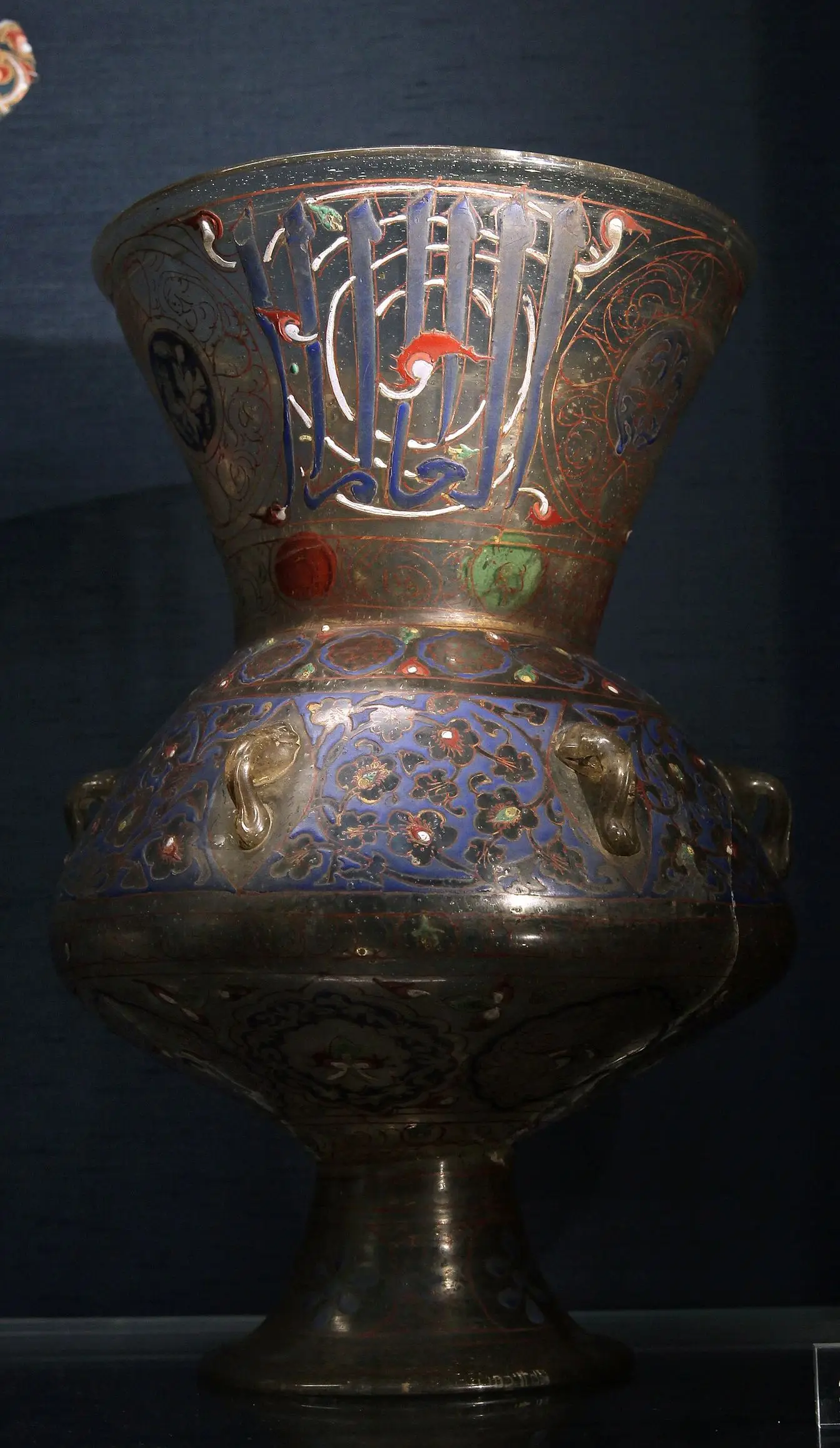
Among the objects on show at the Hurghada Antiquities Museum is a rare Mamluk-era glass mosque lamp linked to Sultan al-Zahir Barquq, who ruled from 784 to 801 AH — 1382 to 1398 CE — and was the first of the Circassian Mamluk sultans, Youm7 reports.
The lamp is made of glass and decorated with fine enamel work and gilding, which Youm7 describes as a reflection of how far glassmaking and ornament had advanced under the Mamluks. An antiquities official quoted by the paper said the piece carries clear inscribed and plant-form decoration on its surface, alongside the blazons that sultans and emirs used during their reigns.
A lamp of this kind — a mishkah — was a lighting vessel, usually swollen at the middle, with a small oil holder and wick fitted inside. They hung from ceilings on long chains and were set in adjacent rows to light mosques, madrasas and public buildings. Over time, Youm7 notes, they became art objects as much as lamps, carrying Quranic verses and the names of sultans and emirs along with geometric and plant motifs; human and animal figures were rarely used on them.
The museum around it
The museum was opened on 29 February 2020 by Prime Minister Mostafa Madbouly, and was the first museum established by the Ministry of Tourism and Antiquities in partnership with the private sector. Youm7 gives its measurements as:
- a total site of about 22,500 square metres
- a commercial area of about 12,000 square metres
- roughly 1,800 square metres of exhibition space across two floors
About 1,400 objects are displayed, running from prehistory through to the modern era and taking in Pharaonic, Islamic and Muhammad Ali-period pieces. The display is arranged chronologically and by theme.
For visitors, this is one of the few indoor cultural attractions on a coast better known for its reefs — and on a day when the weather turns, somewhere to go that is not a beach. The report gives no opening hours and no ticket price.