Divers Film a Dugong at Abu Dabbab Bay, One of Four Marsa Alam Sites Where It Lives Year-Round
Youm7 has published footage of a dugong in the shallows at Abu Dabbab. The director of the Red Sea Protectorates named the four stretches of the Marsa Alam coast where the animal is present all year — and said numbers in the Red Sea are limited.
5 October 2026
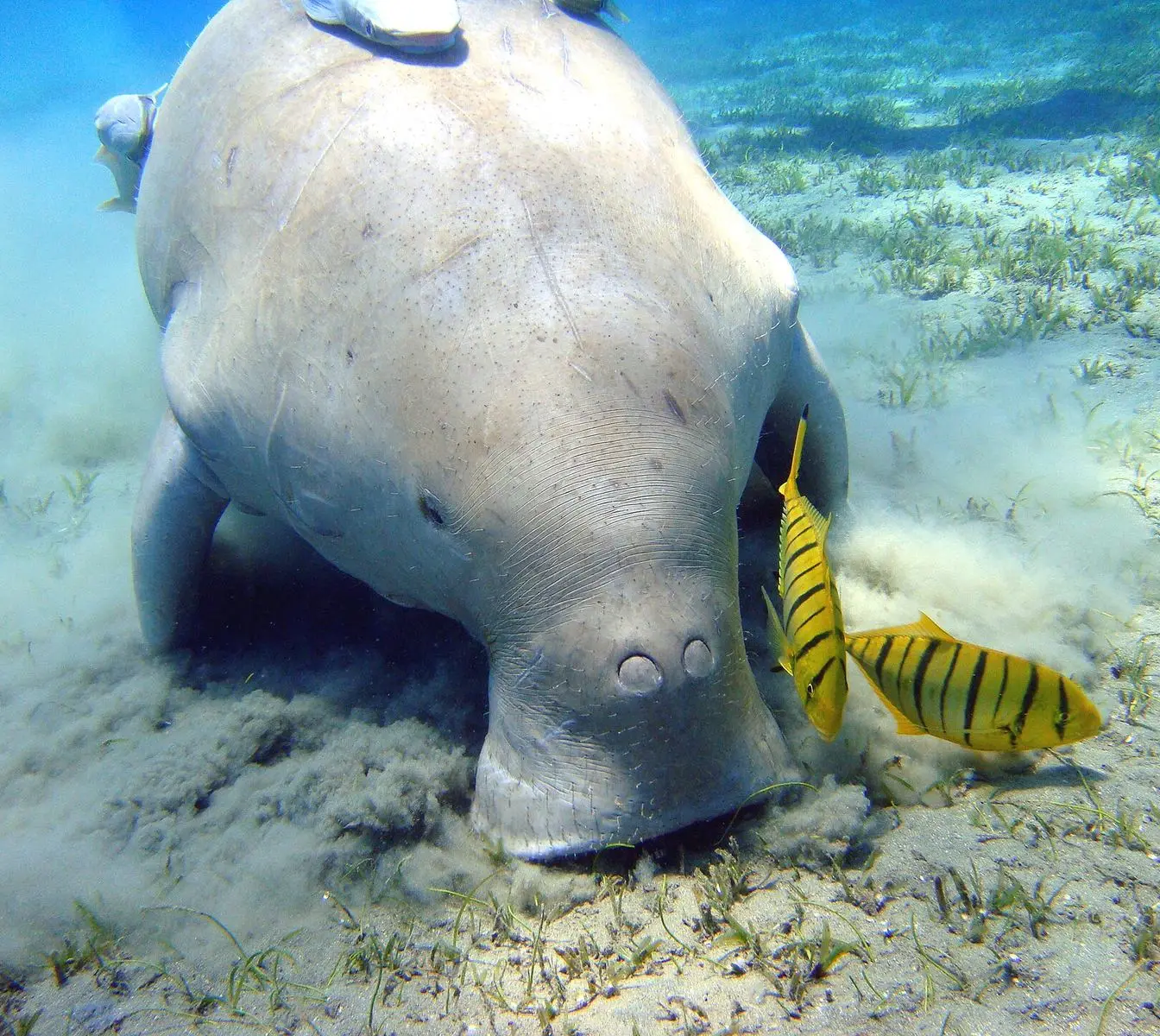
Divers in Marsa Alam have filmed a dugong in the shallows of Abu Dabbab Bay, in footage published by the Egyptian daily Youm7 on Monday.
The sighting is rarer than it looks. Dr Ahmed Ghallab, director of the Red Sea Protectorates, told Youm7 that dugong numbers in the Red Sea are limited, which is why tracking where the animals surface matters for conservation. He named four places along the Marsa Alam coast where dugongs are present year-round:
- Abu Dabbab Bay
- Marsa Mubarak
- Wadi El Gemal
- Tondoba
Ghallab said the animal is sometimes called "the tourists' friend" because it will approach divers and appear close to them underwater — which is why a dugong encounter is one of the things snorkellers and divers come to this stretch of coast hoping for, and why it gives a dive day an exceptional character.
Its survival runs on sea grass. Ghallab said the dugong feeds mainly on sea-grass meadows in shallow water and looks for them where conditions let them grow, so protecting those meadows — along with the bays, islands and marine sites around them — is what keeps the animal here. A female gives birth to a single calf and nurses it for up to 16 months, and the species can live 80 to 100 years, a life cycle Ghallab said depends on a stable and safe marine environment.
The report gives no count of how many dugongs remain in the Red Sea, and announces no new protection measures. Abu Dabbab is the same bay this site wrote about at the weekend as one of the few places in Egypt where you can reliably swim with green turtles. The dugong is the other animal people go there for — and the one nobody can promise you.