Abu Dabbab
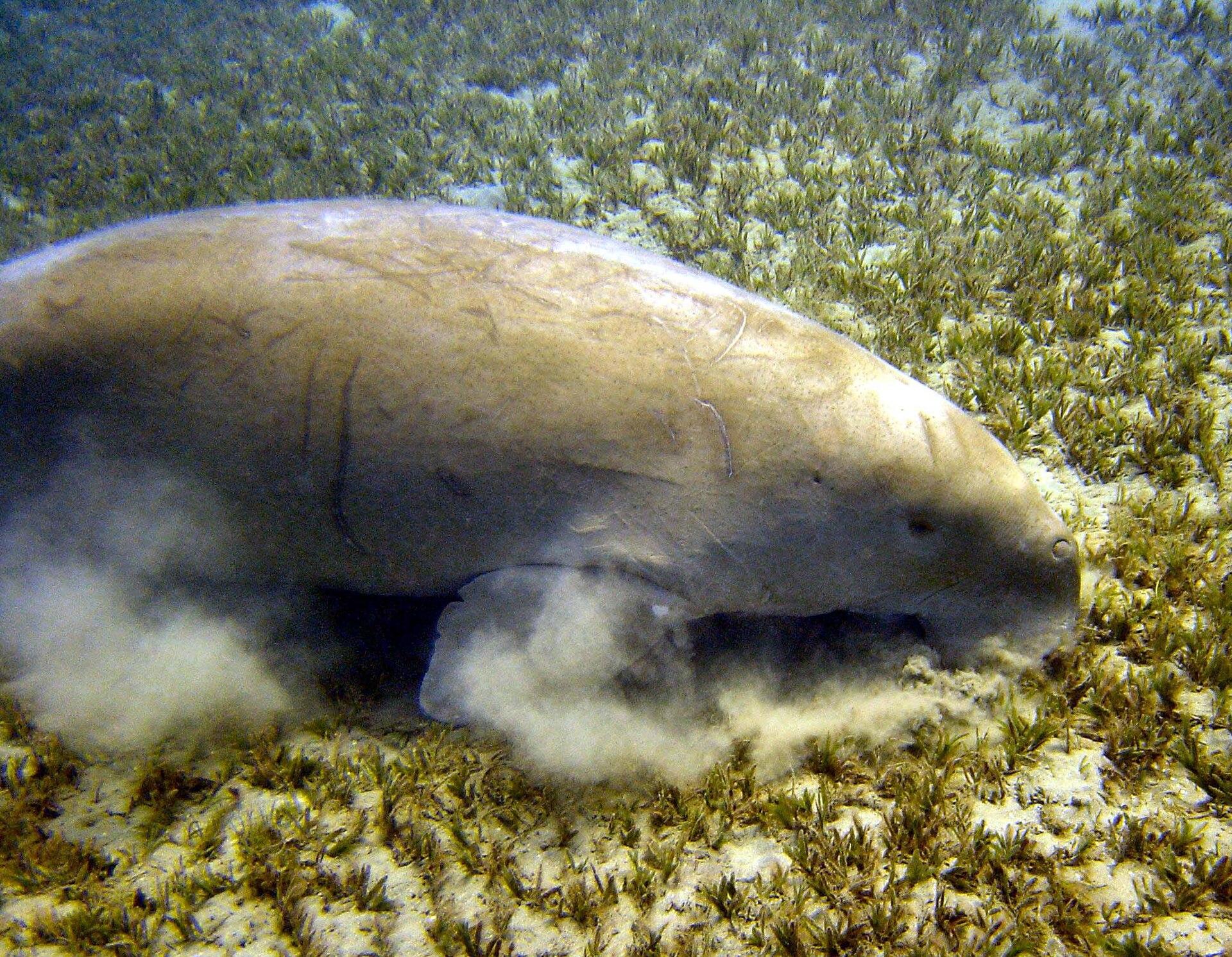
A shallow seagrass bay north of Marsa Alam, the coast’s most reliable place to see dugongs and green turtles — and one of its easiest shore dives.
- Depth
- 3–20m across the seagrass bay; the outer reefs run deeper
- Access
- Shore entry from the beach at Abu Dabbab, about 30 minutes north of Marsa Alam town
- Best season
- Year-round; the bay is sheltered enough to dive on days when offshore sites are cancelled
- Level
- Beginner
Abu Dabbab is a wide, shallow bay with a seagrass meadow across its floor, and that meadow is why the site matters — it feeds the dugongs and green turtles the site is known for. The diving itself is undemanding: you walk in from the beach and stay shallow.
For a snorkeller or a new diver this is the most rewarding easy site on the coast. For an experienced diver it is a slower dive than the offshore reefs, and worth doing for the animals rather than the topography.
Sightings are genuinely variable. Operators who promise a dugong are selling something they cannot deliver; a good centre will tell you the odds honestly and take you anyway, because the turtles are close to certain.
Conditions
- Shallow, sandy and sheltered; minimal current inside the bay
- Easy shore entry, which makes it a common training and check-dive site
- Visibility varies with wind and with how much the seagrass has been stirred up
What you are likely to see
- Dugong — the reason most people come, though sightings are never guaranteed
- Green turtles feeding on the seagrass, seen most dives
- Guitar sharks and stingrays on the sand
- Giant moray on the outer reefs
What to watch out for
- The bay gets busy, and crowding around a feeding dugong is the main threat to the animal and the main reason a sighting ends early. Keep your distance and stay behind it.
- Do not chase, touch, or block the path of a dugong or turtle. Beyond the harm, it is the fastest way to get the site restricted for everyone.
- Seagrass is the habitat, not scenery: fin control matters more here than on a coral wall.
This is planning information, not a dive briefing or a substitute for one. Conditions change; your guide on the day is the authority. Diving emergency numbers and the coast’s recompression chambers are on our emergency contacts page.
Dive centres in Marsa Alam
Listed by the desk, in alphabetical order. Nobody pays to be here.
Awlad Baraka
Dive CentreMarsa Alam
Official site ↗On the map
Blue Ocean Dive Center Marsa Alam
Dive CentreMarsa Alam
Colona Dive Center Marsa Alam
Dive CentreMarsa Alam
Official site ↗
Deep South Diving Center
Dive CentreMarsa Alam
Official site ↗On the map
Emperor Divers Marsa Alam
Dive CentreMarsa Alam
Official site ↗
Marsa Shagra - Diving Center
Dive CentreMarsa Alam
On the map
Also in this bay — Marsa Alam
Dive sites
- Elphinstone ReefAdvanced
The Red Sea’s most famous offshore reef: a narrow wall running north to south off Marsa Alam, known for oceanic whitetips and hammerheads — and for currents that make it an advanced dive.
- The Brothers IslandsAdvanced
Two isolated islands far offshore in the Marine Park, with sheer walls, two wrecks and the most consistent big-animal diving in Egypt.
- Daedalus ReefAdvanced
An isolated reef in open ocean with a lighthouse on it, sheer walls on every side, and the most reliable hammerhead diving in Egypt.
- St John’s ReefIntermediate
A scattered complex of reefs near Egypt’s southern border — caves, coral gardens and the best-preserved hard coral in the country.
- Rocky Island and ZabargadAdvanced
Two remote islands near the Sudanese border — Zabargad an ancient peridot mine with a wreck, Rocky Island a small, current-swept reef with big animals.
Snorkelling
- Abu Dabbab BayShore entry
Long the most famous place in Egypt to try to snorkel with a dugong — sightings have grown less reliable in recent years — and near-certain green turtles, in a shallow sandy bay you walk into from the beach.
- Marsa MubarakShore or boat
A quieter alternative to Abu Dabbab a little north of Marsa Alam — same seagrass, same turtles, usually far fewer people.
The town guide for Marsa Alam