Inside Hurghada's Antiquities Museum: About 1,400 Objects, 41 Display Cases and a Room Set Out as an Islamic House
Hurghada's museum runs from prehistory to the age of Muhammad Ali along 11 corridors — nine of them for ancient Egypt — with statues of Queen Meritamun, three royal objects of Thutmose III, a collection of Islamic lustre pottery and cases showing bedouin tent furniture beside a howdah.
16 October 2026
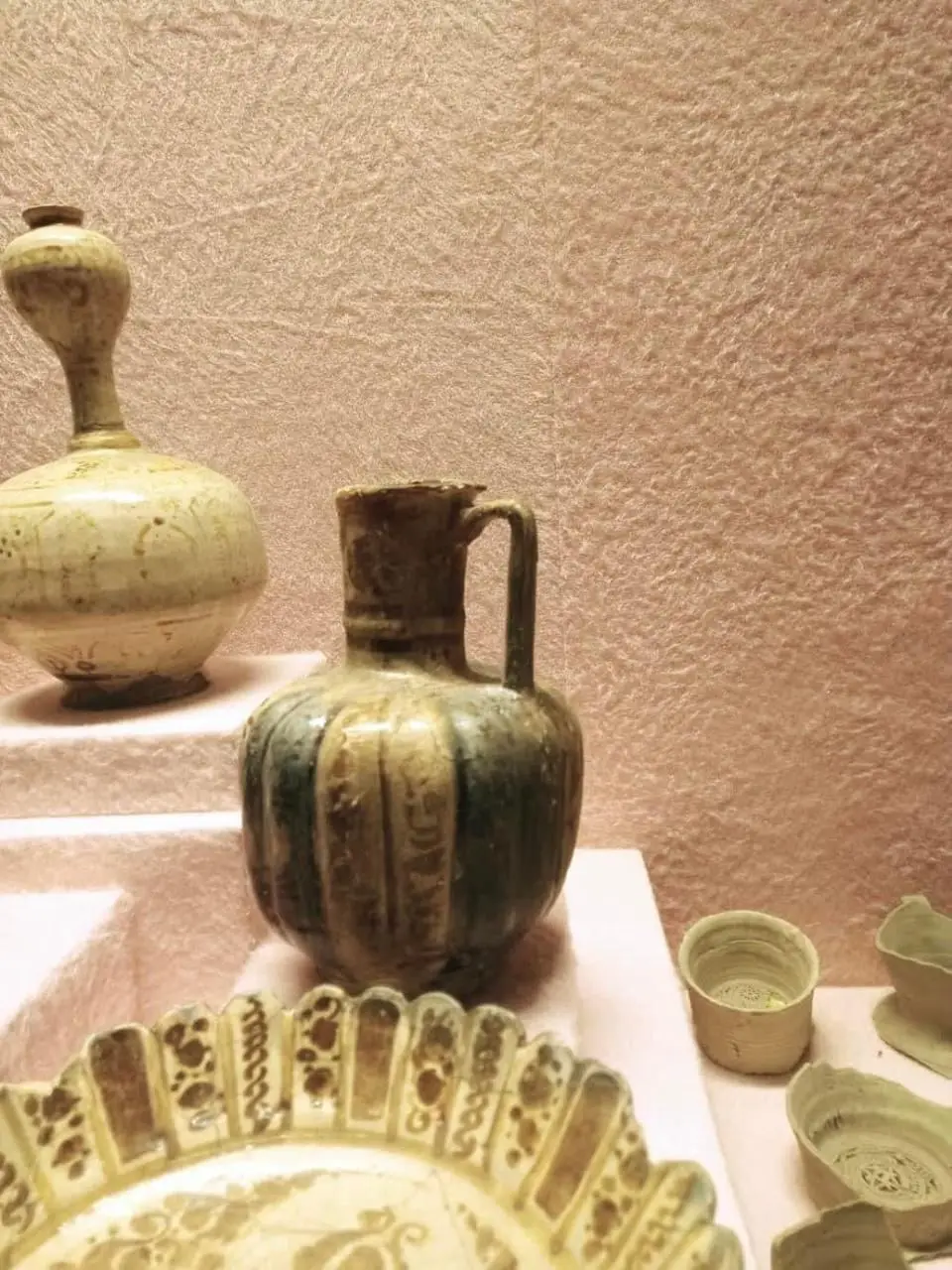
Hurghada's Antiquities Museum holds about 1,400 objects from periods running from prehistory to the era of Muhammad Ali, and a feature published by Youm7 on Friday sets out what a visitor actually walks past — including a substantial group of Islamic pieces.
How the museum is laid out
The display halls hold 11 corridors and 41 display cases, with further objects shown outside. The galleries follow a chronological and thematic order, so the route moves through the historical periods in sequence. Nine of the 11 corridors are given to ancient Egypt.
The museum opened on 29 February 2020 at a ceremony attended by Prime Minister Mostafa Madbouly, and was the first museum the Ministry of Tourism and Antiquities established in partnership with the private sector. The site covers about 22,500 square metres in all: roughly 12,000 square metres of commercial space and about 1,800 square metres of museum display spread over two floors. A Roman theatre on the site is in operation.
The pharaonic rooms
Among the museum's headline pieces are statues of Queen Meritamun of the Nineteenth Dynasty, and three royal objects belonging to Thutmose III, who fought 17 battles during his reign by Youm7's account.
The Islamic pottery
Ceramics are among the oldest crafts of Islamic civilisation, and the pieces on show in Hurghada trace a long development in how vessels were made and decorated. The first specialised schools of ceramic production appeared in the Umayyad period, Youm7 writes, and the craft expanded after the Islamic conquests carried artistic influences between regions.
The Abbasid period brought new ornament: the foliate scrollwork later known as rakish, alongside geometric and abstract forms and motifs taken from plants and animals, so that a single vessel carried both a practical use and an aesthetic value. One innovation of that period was metallic lustre glaze, used on pottery as a substitute for vessels of gold and silver.
Several types are represented from the Abbasid and Fatimid periods in particular — lustreware, porcelain with raised decoration, ware carved under the glaze, and the incised decoration that spread widely in Abbasid times.
A tent, a house and a howdah
Other cases set out scenes from the Islamic house. Simple furnishings of the kind used in bedouin encampments — cushions, rugs and light folding seats suited to a mobile life — stand against more elaborate pieces, among them the howdah, the mahffa and the mahmal. Beds, tables, chairs and decorated cabinets show how furniture differed by function and setting, in private houses and public buildings alike.
Youm7's feature does not give the museum's opening hours or ticket prices.