The Red Sea Dive Sites That Will Spoil You for Everywhere Else
Eight dive sites between El Gouna and the Sudanese border that set a bar the rest of the world struggles to clear — ranked by how thoroughly they ruin you.
1 August 2026
Divers who learn on this coast have a problem, and they only discover it later: the rest of the world. The northern Red Sea sits with Truk Lagoon and Scapa Flow among the handful of places where wreck diving is done at the highest level, and the reefs would justify the flight without a single ship on them. Warm water year-round, visibility that commonly runs twenty metres or better, coral in genuinely good condition — and then you go somewhere else, and somewhere else has some explaining to do.
So here they are: the eight sites doing the most damage, ranked by how thoroughly they will ruin your future holidays. The honest caveats are included, because that is how this desk works — nothing below guarantees a shark, and two of these you cannot reach from any hotel.
8. Giftun Islands — the unfair baseline
Most of this coast's divers make their first Red Sea dive at the Giftun Islands, and that is exactly the problem. Sheltered sites, mild current, dense hard and soft coral gardens inside a protected area, turtles and the occasional reef shark on the outer drop-offs. As places to learn go, this is cheating. Experienced divers dismiss them as beginner reefs, which undersells the seaward sites — and the diving is better away from the busy day-trip beach at Mahmya, so ask for the outer sites. Spoils you for: every murky training site anyone shows you afterwards.
7. Abu Dabbab — a sea cow off the beach
A wide, shallow seagrass bay north of Marsa Alam that you walk into from the sand. Green turtles feed on the meadow and are seen on most dives; the dugong is the reason most people come, and sightings are genuinely variable — an operator promising one is selling something they cannot deliver. It is an undemanding, sheltered dive that still works on days the offshore boats are cancelled. Keep your distance and mind your fins: crowding a feeding dugong is the main reason a sighting ends early. Spoils you for: shore diving anywhere that greets you with bare sand and a long swim.
6. Panorama Reef — a world-class wall as a routine day out
A substantial reef off Safaga with sheer walls on three sides and some of the healthiest soft coral in the northern Red Sea — reached by an ordinary day boat, about forty-five minutes out. On a clear day with the soft coral open, this is as good as northern Red Sea diving gets outside a liveaboard itinerary. That it leaves from plain, unglamorous Safaga is precisely why it stays relatively uncrowded. One rule: set a hard depth limit before you descend, because the wall goes far deeper than you need. Spoils you for: destinations where the good wall is a once-a-trip event.
5. Sha'ab Abu Nuhas — four wrecks before dinner
One reef at the mouth of the Gulf of Suez, at least four ships, all divable in a day: the Giannis D, whose stern lies canted at roughly forty-five degrees so every corridor argues with your inner ear; the Carnatic, on the reef since 1869 and now more reef than ship; the Chrisoula K, her holds still stacked with Italian floor tiles; and the deeper, quieter Kimon M for the days the sea allows. Several wrecks in a day is also a lot of ascents — watch your surface intervals, not the itinerary. Spoils you for: anywhere that builds an entire week around one wreck.
4. St John's Reef — coral as the headline act
The far south has the healthiest hard coral in Egypt, largely because almost nobody has been diving it for very long. St John's, a scatter of reefs near the Sudanese border, is its centrepiece, complete with cathedral-like caves and swim-throughs at Umm Kharerim. Divers come home talking about the coral rather than the animals, which on this coast is unusual. It is liveaboard-only and a long way — the entire reason it is still in this condition — and remoteness cuts both ways: you are further from a recompression chamber here than anywhere else in Egypt, so dive well inside your limits. Spoils you for: every reef sold as pristine that turns out to mean alive-ish.
3. SS Thistlegorm — history you swim through
A British war freighter bombed at anchor in October 1941, still loaded with the equipment of an army that never received it: BSA and Norton motorcycles racked inside Bedford trucks, rifles, ammunition boxes, Wellington boots, and two seventy-tonne steam locomotives blown clear of the hull onto the seabed. The best-known wreck dive in the world outside Truk Lagoon, and it earns the billing. It is also crowded, current-swept and a war grave where nine men died — go early, go with an operator that limits the group, and take nothing. Her sister in the same story, the Rosalie Moller, bombed two nights later by the same squadron, lies at technical depths: better preserved, without the crowd, for the few qualified to see her. Spoils you for: every famous wreck that turns out to be a stripped barge in bad visibility.
2. The Brothers — where it gets serious
Two small islands sixty kilometres offshore in the Marine Park, liveaboard-only, and where Red Sea diving stops being casual. Big Brother carries the Numidia, a steamer lost in 1901 that a century of permanent current has not so much colonised as buried in soft coral. Little Brother has, for many divers, the better diving: a plateau where thresher sharks come to be cleaned, and soft coral that is hard to overstate. Strong current is the normal condition, permits are required, and the operators who insist on experience requirements are the ones to book with. Spoils you for: anywhere sharks are a brochure photo rather than a reasonable expectation.
1. Elphinstone Reef — an expedition, priced as a day trip
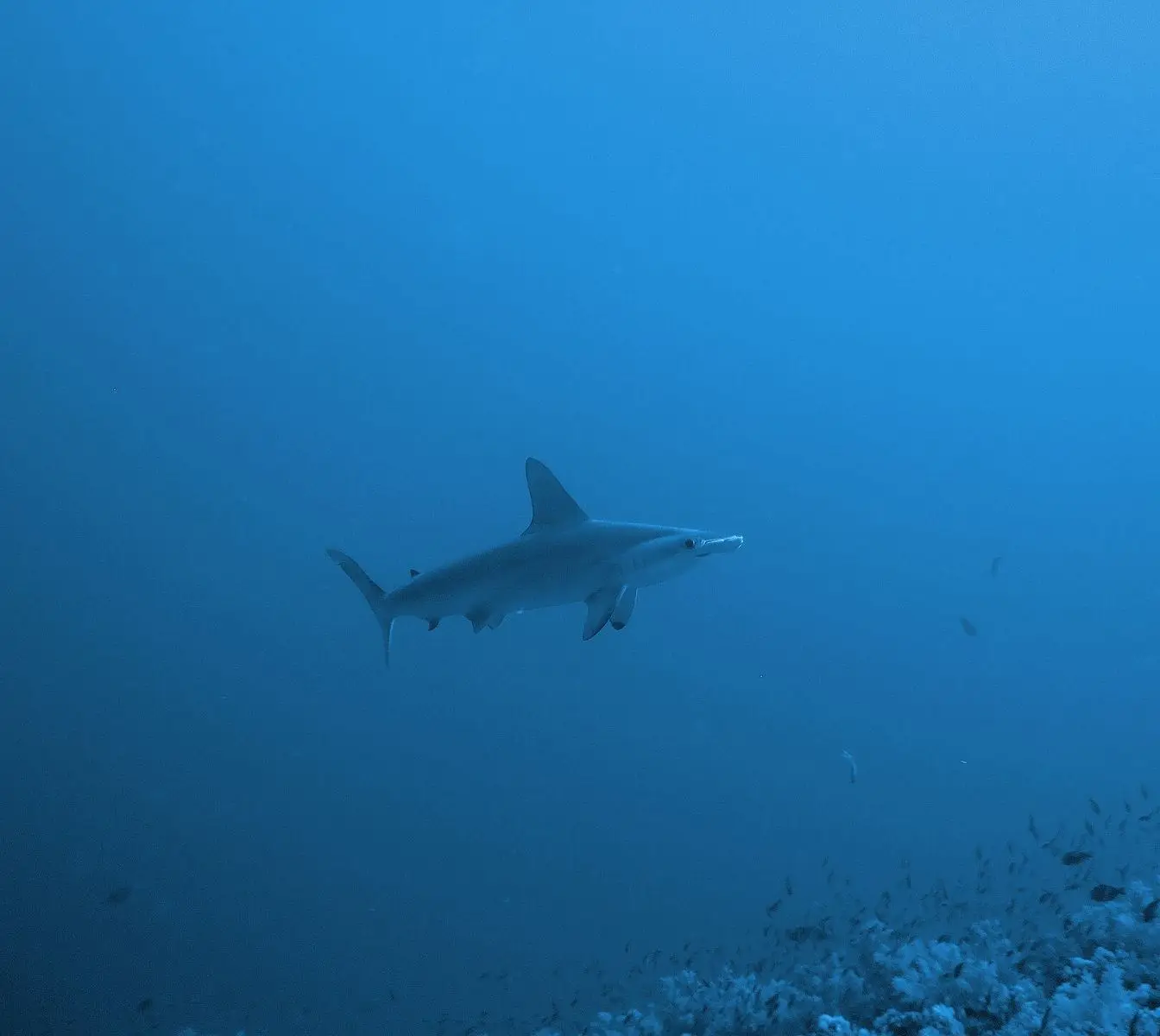
The most ruinous site on the coast, because of what it costs to reach: a day boat from Marsa Alam or Port Ghalib, thirty to forty-five minutes offshore, sea state permitting. For that you get a three-hundred-metre reef rising alone from deep water, oceanic whitetips most reliably from October to December, scalloped hammerheads deeper and early in the day, and a steep, healthy wall in blue water for the days the sharks do not show — because a week of Elphinstone dives can pass without one. It is genuinely advanced: centres asking for fifty-plus logged dives and current experience are reading the site correctly, not gatekeeping. But that is the point. Elsewhere, this class of diving is an expedition. Here it is a day out with lunch on board. Spoils you for: everywhere pelagics cost you a week at sea.
The arithmetic is cruel and simple. A sea in the mid-twenties Celsius in the cooler months and high twenties in summer, visibility that even the soft weeks of late summer leave at twenty metres or better, reefs that start minutes from shore — you can be floating over coral within an hour of landing. Everything you dive afterwards gets compared to that. We accept no responsibility for what this list does to your travel budget; we only promise that every claim in it is the same one we publish, caveats and all, on our dive-site and wreck pages.