The Red Sea in Numbers: Facts to Drop at Dinner
Thirteen genuinely surprising things about this sea — a reef that will not bleach, a wreck Cousteau hid for decades, a fish that changes sex when the boss dies — and one that keeps you out of trouble.
1 August 2026
All of these came out of our own files — reef research, dive-site notes, wreck histories, the marine-life list. Where the record disagrees with itself, we say so.
The reef
1. Northern Red Sea corals live several degrees below their own bleaching ceiling, where most reef systems on earth now have almost none. Scientists in the Gulf of Aqaba have taken corals from these waters into tanks, pushed them past any temperature the reef has recorded, and struggled to make them bleach at all.
2. That resistance is an accident of the last ice age. Sea level fell far enough to all but close the Bab al-Mandab and the reefs inside were largely lost; when the sea rose, coral recolonised from the Indian Ocean at the bottom, so every larva had to cross the hot southern end to reach the north — then settled into water that never gets that warm.
3. Headroom is not immunity, and the thing most likely to spend it is sewage. Nutrient loading appears to lower thermal tolerance itself, so an over-fertilised coral bleaches at a temperature a healthy one handles without complaint — which makes municipal water treatment the biggest lever this coast holds.
The wrecks
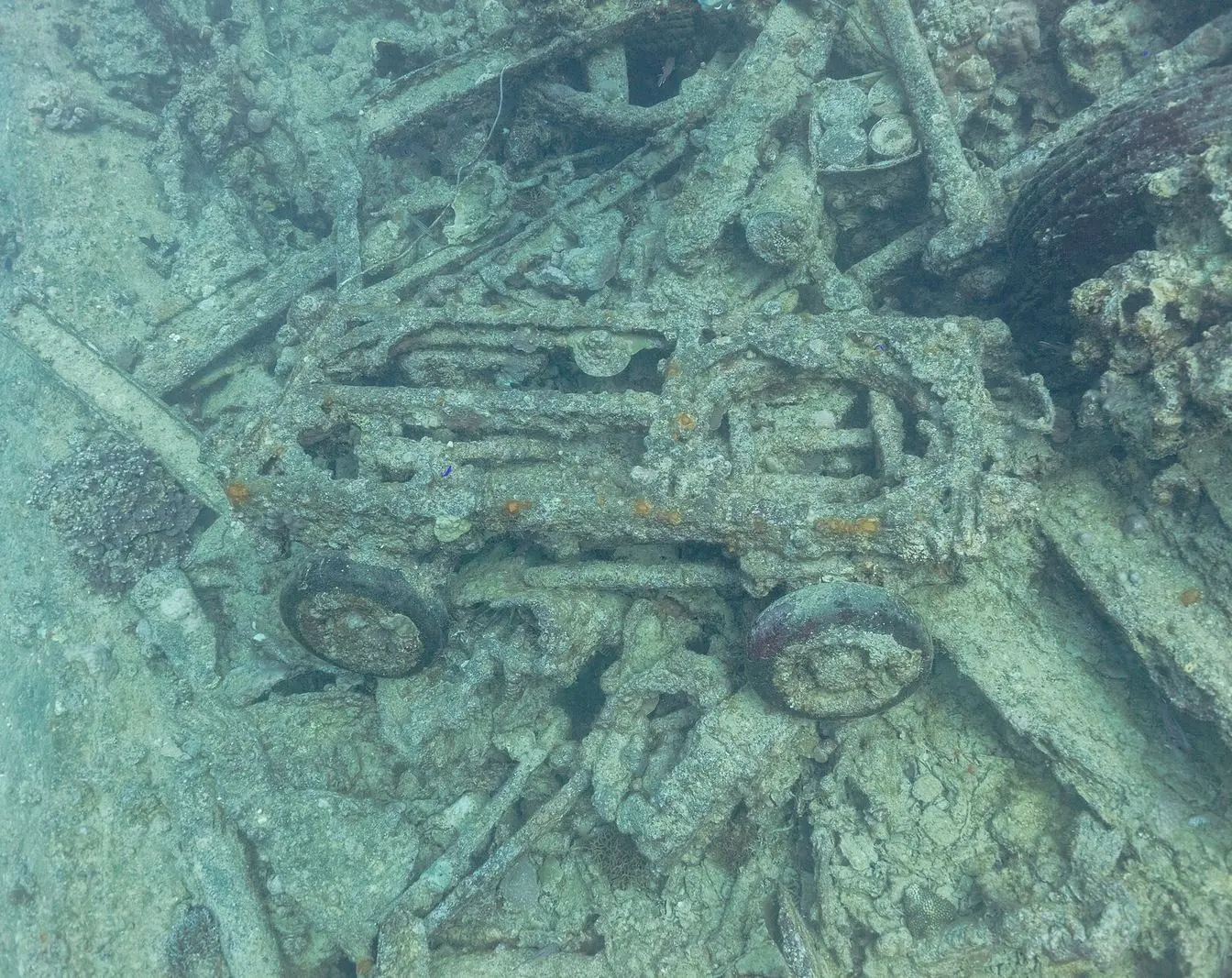
4. The most famous wreck in the Red Sea was sunk by bombers looking for something else. Two Heinkel He 111s flew from Crete on 5 October 1941 hunting the Queen Mary, missed her, and found an anchored convoy on the way home; the SS Thistlegorm took two bombs into her ammunition hold and sank in nine minutes, killing four crew and five naval gunners — and throwing both of the 70-tonne locomotives chained to her deck clear of the hull, where they still lie.
5. Jacques Cousteau dived her in 1955, published the photographs in National Geographic, and then refused to say where she was. It was effectively lost again for decades, until skippers relocated it in the early 1990s, and it is now the most dived wreck in the Red Sea — both the appeal and the problem.
6. Two nights later the same squadron sank a second ship in the same anchorage, and that one is in better condition. The collier Rosalie Moller went down slowly and upright, masts standing, her starboard anchor chain still running out as it was let go in 1941; she lies at 45–50m, beyond recreational limits, which is why almost nobody has touched her.
7. The oldest wreck dived on this coast went down in 1869 with 40,000 gold sovereigns aboard. The P&O steamer Carnatic struck Abu Nuhas and seemed stable, so the captain kept everyone aboard; thirty-six hours later the hull snapped in two and thirty-one people died. Salvors had the gold within months, leaving a hundred and fifty years of coral on an iron frame as the better cargo.
8. One reef at the mouth of the Gulf of Suez has been catching ships since the 1860s and now holds at least four, divable in a single day. Among the cargoes still down there: Italian floor tiles from 1981, still in their bundles, and a hold that left Turkey for India full of lentils in 1978, of which the sea has left nothing.
9. One of the great coral-covered wrecks of the Red Sea was six months old when she died. The Numidia hit Big Brother Island at full speed on her sixth voyage in July 1901, slid off the shelf that autumn, and now hangs down the wall from ten metres to beyond eighty, so buried in soft coral she reads as reef with railway wheels in it.
10. The coast's largest grave has a death toll nobody can establish. The ferry Salem Express struck a reef near Safaga on 15 December 1991 and sank in around twenty minutes; the official toll is 470, she carried far more people than her manifest recorded, and estimates run past 1,600. Egypt has declared her a maritime tomb: the interior is closed and the lifeboats still sit in their davits.
The sea itself
11. One of the islands divers pass in the deep south is a hill of olivine that supplied peridot to the ancient world. Zabargad has a sheltered lagoon, a wreck, and a long history of people taking stones off it — now illegal as well as wrong.
12. The most numerous fish on the reef changes sex when the boss dies. Those clouds of orange-pink anthias above the coral are female, the larger purple-tinged ones male, and when a male dies the dominant female becomes one.
13. Most of the sand you are lying on came out of a fish. Parrotfish graze hard coral with a visible beak — you can hear them crunching — and a large one produces hundreds of kilos of sand a year.
And one to keep you out of trouble. The titan triggerfish is the only fish here that may come at you unprovoked, and its territory is a cone rising from the nest — so swimming up is swimming further in. Move away horizontally, fins towards the fish.
Two of the ships above are war graves and one is a maritime tomb; if you dive them, dive them as such. The rest is free to repeat over dinner, ideally to someone who has just called the Red Sea nice but warm.