The Red Sea Snorkel Spots Worth Getting Wet For (Ranked)
Eight snorkel spots between El Gouna and Marsa Alam, ranked best last by what you actually get — with the famous dugong bay placed honestly and the empty number one named.
1 August 2026
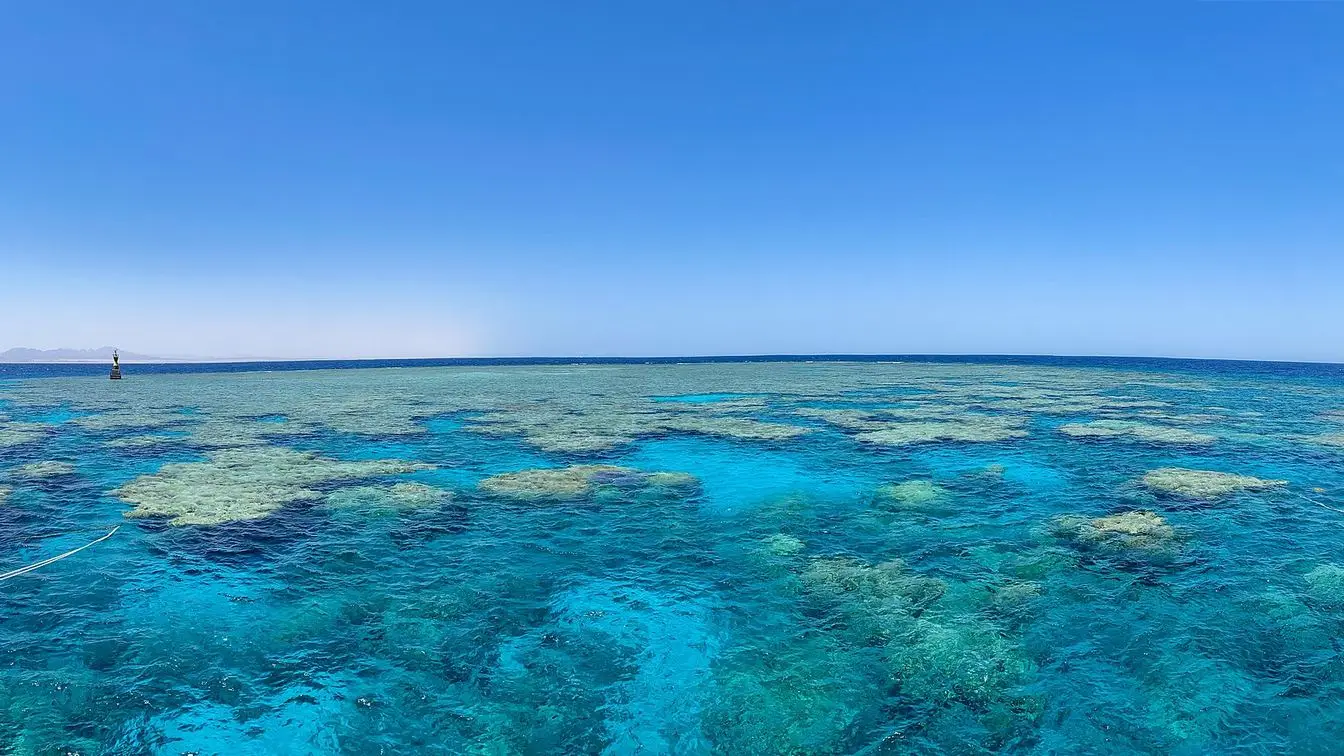
Far more people snorkel this coast than dive it, and they are served worse: dive sites get detailed write-ups, snorkellers get told there is a house reef. So — eight spots between El Gouna and Marsa Alam, ranked, best last, on a snorkeller's logic: what the water holds, how easily you get in, and how much survives the company. Two house rules carry over: every entry says who it is not for, and nothing promises an animal — operators who guarantee turtles or dugongs are lying. Access and fees were re-checked on 1 August 2026; they move.
8. Makadi Bay house reef — the easiest good reef
The house reef is the underrated half of Makadi's family-holiday deal. Most hotels run a jetty over the reef flat, steps into deep water at the end — solving what makes shore snorkelling hard for children, the long shallow walk over sharp coral. The reef runs the bay's length, better than its reputation. The steps put a child straight in over their head: vests, adult in first. Current runs the reef edge on windy days — start against it; quality varies along the bay — ask which end is better. Not the coast's best reef, one of the easiest good ones. Not for: anyone chasing the best coral rather than the easiest entry.
7. Shaab El Erg — dolphins strictly optional
El Gouna's boat snorkel is a big horseshoe reef: shallow, sandy, brightly lit lagoon, scattered coral pinnacles, a gentler drop than most. The outer edge picks up current — stay inside the horseshoe. The resident spinners are the sales pitch — but they are free-ranging, "Dolphin House" is a marketing name, not a promise, and the lagoon is where the pod rests by day. Boats that drop swimmers onto a resting pod are disturbing them — Egyptian guidance has tightened on exactly this — so ask how your skipper behaves before you book. Not for: anyone who will call the day a failure if the pod stays away.
6. Giftun Islands — proper coral, generously shared
Hurghada's standard day trip, forty-five minutes out of the marina, and the coast's most accessible proper coral: reef gardens with real density and colour, inside a protected area whose entry fees fund the protection. The catch is volume: most of Hurghada's day-trip traffic comes here — dozens of boats on the same few moorings on busy days. You enter off a ladder into deep water; if that worries you, say so before the boat leaves, not at the ladder — vests are a normal request. There is no shallow flat to stand on, and standing on coral to fix a mask is the most common damage snorkellers do. Skip Mahmya's bar-and-crowds beach; the better snorkelling is the outer sites. Not for: nervous swimmers who want the bottom within reach, or anyone allergic to company.
5. Abu Dabbab Bay — the famous one, placed honestly
Fifth place for Egypt's most famous snorkel is deliberate. What made it famous is true: a wide, shallow seagrass bay about thirty minutes north of Marsa Alam, with one of the gentlest walk-in entries on the coast, where green turtles graze on most visits and the animals are feeding, not passing through. But it is the busiest snorkelling site in the south, and your visit is only as good as the crowd. It is a managed beach: expect an entrance fee, usually included on organised trips and waived for guests of the bay's hotels. And the dugong, the reason people come, has grown less reliable in recent years; anyone promising one is selling what they cannot deliver. Go early, keep well back — a crowded dugong stops feeding and leaves — never block its path to the surface, and mind your fins: seagrass is habitat, not scenery. Not for: anyone who booked the dugong rather than the bay.
4. Sahl Hasheesh house reef — the kindest first snorkel
One of the northern coast's best shore snorkels: a continuous reef within swimming distance of a sandy beach, far better than the bay's quiet reputation suggests. For a first Red Sea snorkel it is kinder than any boat trip — stand in the shallows, get used to the mask, swim out at your own pace — and the sheltered bay often works on windy days. The drop-off is a real edge: deep water starts abruptly, with no shallow refuge beyond, so stay parallel to the reef. Where there is no jetty, the swim crosses a shallow reef flat; time it badly at low water and you will be tempted to stand up. Do not — go around, or use a jetty. Not for: anyone who cannot resist standing when the water gets thin.
3. Soma Bay drop-off — the divers' feeling, no tank
Soma Bay is the coast's exception to gentle reef-flat snorkelling: a long jetty ends in steps at a near-vertical wall, and you are floating over deep blue with the reef at your shoulder — the most dramatic thing here without a boat. The wall carries good soft coral, bigger fish than the shallow bays — jacks, barracuda, big wrasse — and turtles fairly regularly. The drama is the caution: deep water immediately, nowhere to stand or retreat, noticeable current, and afternoon wind that turns the surface to chop. Morning only, confident swimmers only, float if unsure. Not for: children, uneasy swimmers, or afternoons.
2. Marsa Mubarak — Abu Dabbab without the queue
A little north of Marsa Alam sits the answer to Abu Dabbab's crowds: the same seagrass, the same reliable green turtles, usually far fewer people — for many, the better morning. It adds what sandy bays lack, two coral pinnacles at the bay mouth — sited where the bay opens to deeper water, which is where any current will be. The dugong arithmetic may even be shifting: sightings are occasional, and some recent reports rate the chances as well as anywhere on the coast. Caveats: some hotels control beach access — check before planning a shore entry; Port Ghalib boats stop here, so it is not undiscovered; and the crowding rules bite harder when one boat arrives into an empty bay. Not for: anyone counting on walking onto the beach unannounced.
1. El Quseir house reefs — the best reef, and nobody in it
Number one is a stretch of coast, not a single bay: the best shore-accessible reef in Egypt, with the fewest people in it. The reef comes close to shore, so the swim is short; the coral is healthier than in the busy northern bays; the fish are bigger and more numerous; turtles regular, visibility genuinely good. Several hotels exist specifically for what is off their beach — the town's whole proposition. Entries vary a lot by hotel — some cross a reef flat with a marked channel, and outside it you will scrape coral at low water — so ask about the specific beach before booking. Quiet cuts both ways: there may be nobody else in the water, so snorkel with someone. The price: a two-hour transfer from Hurghada — worth it if snorkelling is the point of your holiday. Not for: anyone whose snorkelling is a thing they do twice.
Fame moved down this list and reef-per-person moved up, because a bay is only as good as your morning in it. Every claim here is the one on our snorkel pages, hedge for hedge; when access rules or dugongs change, those pages change first.