El Gouna vs Hurghada: The Honest Differences
Twenty-five kilometres apart, one shared airport, almost nothing else in common. Ten honest differences between El Gouna and Hurghada — money, hassle, beaches, diving, kitesurfing — and who should book which.
1 August 2026
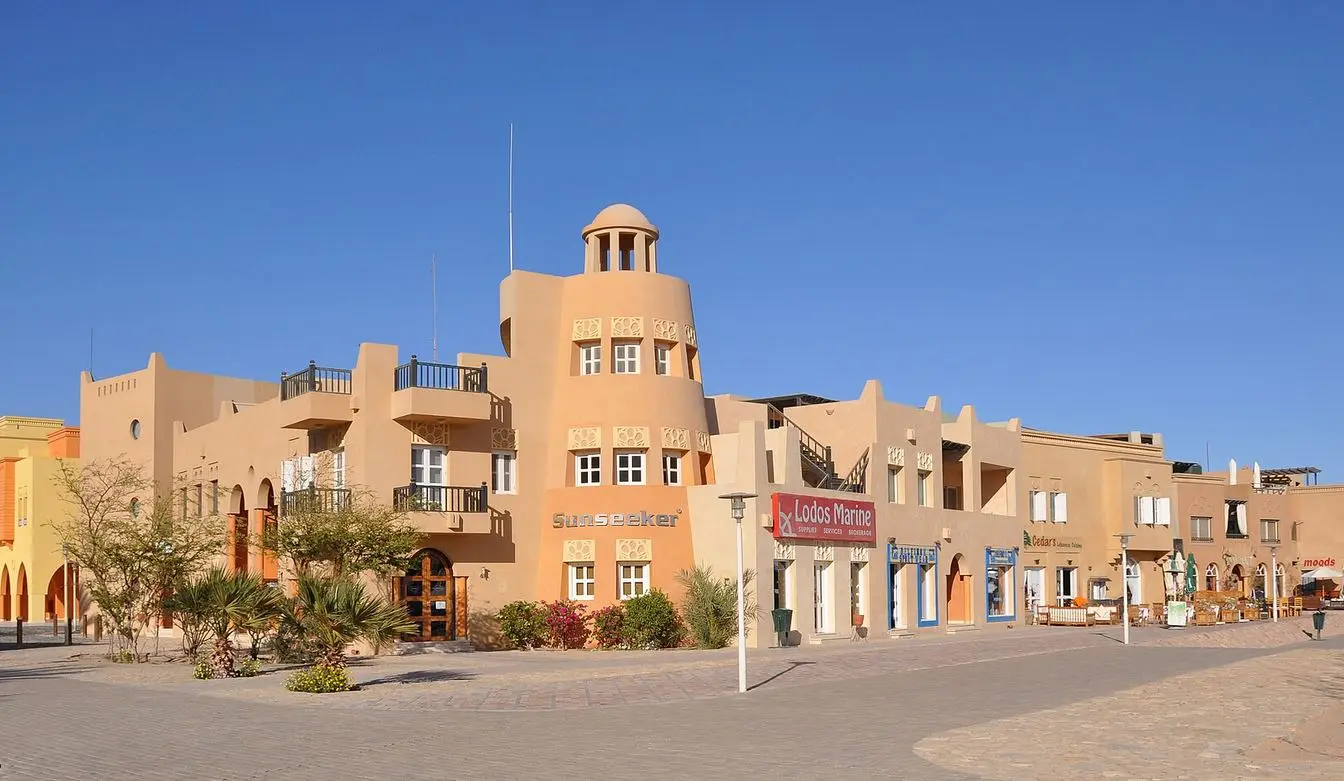
Twenty-five kilometres of coast road separate El Gouna and Hurghada, and the two get compared constantly because they share an airport and almost nothing else. The drive between them takes half an hour and crosses a genuine divide: El Gouna was designed, Hurghada grew. The choice is not really about quality — both have excellent hotels and both sit on the same sea. It is about how much friction you want between you and the country you have flown to. Here are the ten differences that actually decide it.
1. One was drawn, the other grew
El Gouna is not a town that grew — it was built, from 1989 onwards, on a stretch of empty coast by the Egyptian developer Orascom. The islands and lagoons are dug, the architecture is coordinated, the streets are swept. Hurghada is the only place on this stretch that is a city rather than a resort: roughly a quarter of a million people, running on fishing, trade and tourism, in that historical order. Every other difference on this list follows from that one.
2. The money
No contest, in opposite directions. El Gouna is the most expensive town on the coast by a clear margin — expect Cairo prices or above for food and drink, and considerably more than Hurghada for the same hotel standard. Hurghada is the cheapest base on the coast, often by a lot. Its catch travels with it: it is also the easiest place to overpay if you do not check a price before agreeing to it.
3. The hassle
In El Gouna, essentially none — nobody will chase you down a street. In Hurghada it is real and constant in the tourist areas: taxis, shops, boat touts. It is rarely threatening and it does wear people down. Learning to say no pleasantly and walk on is the single skill that changes a Hurghada trip, and nobody tells you that before you arrive.
4. Getting around
El Gouna is walkable in parts, and the rest is covered by cheap tuk-tuks and a bus network that runs late and costs very little. Hurghada is spread out — El Dahar, Sekalla and the southern hotel corridor feel like three different towns — so it is taxis for most journeys, and agree the fare before you get in.
5. Eating and evenings
Both win, differently. El Gouna has the strongest restaurant and bar scene between Hurghada and the Sudanese border — and it is not close — with Abu Tig Marina carrying the volume and Downtown cheaper and more relaxed. Hurghada answers with the widest range on the coast at every price point, from koshary counters in El Dahar to the marina's waterfront restaurants, and it is the one town where you can eat genuinely local food easily and cheaply. Nightlife runs later and louder in Hurghada than anywhere else on this coast.
6. Beaches
El Gouna's are man-made and shelve gently: good for children, unexciting for snorkellers, and thin on reef life close in. The wind is a feature, not a bug — it is what makes the kitesurfing, and what makes lying on a lounger in the afternoon less restful than you might imagine. Hurghada's town beaches are functional rather than beautiful; the real swimming and snorkelling is offshore at the Giftun islands, a short boat ride out, where marine park fees apply — and fund the protection.
7. Diving
Hurghada, comfortably. It has the widest choice of centres and the shortest boat rides out to Giftun. From El Gouna the good sites are a boat ride away, which adds travel time to every dive day.
8. Kitesurfing
El Gouna, and it is not close. Mangroovy beach is one of the best-known launches in the country, and the schools and the whole scene are there. Hurghada: possible, but not why anyone comes.
9. The feeling of being in Egypt
El Gouna keeps it deliberately low: a curated environment where almost everyone speaks English and the prices are European. Hurghada is the opposite: a working city that existed before tourism, with hospitals, banks, hardware shops and actual neighbourhoods. The shortest version is this: El Gouna is a lovely place that could be almost anywhere. El Dahar could not.
10. Who should book which
El Gouna suits anyone who wants to walk out of a hotel and find somewhere to go without a taxi, kitesurfers, and remote workers or longer stays — the cafés, the coworking and the resident foreign community give it a year-round pulse the resort bays entirely lack. Hurghada suits first trips to the Red Sea, anyone booking on price, divers doing day boats, and people who want to eat somewhere different every night without it costing much.
And the secret both sides know: you do not strictly have to choose. They are half an hour apart, taxis are cheap, and a week in one with an evening in the other is a very common and sensible plan.